
Stretching has been part of athletic routines for generations, yet its role continues to be debated as training science evolves. Current sports medicine research paints a more precise picture of how, when, and why stretching matters. When used correctly, stretching supports movement efficiency, injury risk management, and long-term musculoskeletal health for both competitive athletes and active adults.
Stretching and Muscle Function
Muscles generate force best when they move through an appropriate range of motion. Limited flexibility can alter movement mechanics, placing excess stress on joints and surrounding tissues. A 2012 study published in The Journal of Strength and Conditioning Research found that adequate flexibility contributes to improved movement economy, particularly during repetitive activities like running or cycling. Stretching helps maintain muscle length, which supports balanced force distribution during physical activity.
Injury Risk and What the Evidence Shows
The relationship between stretching and injury prevention has been widely studied. Research indicates that stretching alone does not eliminate injury risk, but it can play a supporting role when combined with proper warm-ups and strength training. A large review in The British Journal of Sports Medicine (2013) reported that dynamic stretching performed before activity improves joint mobility without reducing muscle strength, which is important for injury risk reduction. Static stretching, on the other hand, appears more effective after activity or during separate flexibility sessions.
Dynamic vs Static Stretching
Sports medicine distinguishes between two primary stretching approaches. Dynamic stretching involves controlled movement through a range of motion and is often used before physical activity. Studies show it increases blood flow and neuromuscular readiness without impairing performance. Static stretching involves holding a muscle in a lengthened position for a set time. Research published in Medicine & Science in Sports & Exercise (2013) suggests prolonged static stretching before high-intensity activity may temporarily reduce maximal strength output, which is why it is generally recommended after exercise.
Stretching and Recovery
Post-activity stretching is commonly used to support recovery. While stretching does not appear to prevent delayed onset muscle soreness on its own, evidence shows it can improve circulation and promote relaxation after training. A 2015 review in Applied Physiology, Nutrition, and Metabolism noted that stretching combined with active recovery may support overall comfort and mobility between training sessions. Improved flexibility also allows athletes to maintain consistent training volume over time.
Joint Health and Long-Term Mobility
Maintaining joint range of motion becomes increasingly important with age. Reduced flexibility has been linked to functional limitations and altered movement patterns. A longitudinal study in The American Journal of Sports Medicine (2016) observed that athletes who maintained regular flexibility routines experienced fewer mobility restrictions later in life. Stretching supports connective tissue elasticity, which plays a role in joint health and long-term physical independence.
Stretching in Structured Training Environments
Stretching often appears within structured fitness settings, including rehabilitation programs, team practices, and group fitness classes. In these environments, stretching protocols are often guided to match the demands of specific activities. Supervised stretching ensures movements are performed safely and in appropriate sequence, which aligns with sports medicine recommendations for injury risk management.
Stretching and Performance Considerations
Performance outcomes depend on timing and context. Research consistently shows that dynamic stretching before activity can enhance power output and agility. A 2018 meta-analysis in Sports Medicine concluded that dynamic stretching improves sprint performance and jump height compared to static stretching performed immediately before activity. Static stretching remains valuable when used separately from competition or training sessions focused on strength and speed.
Individual Factors Matter
Sports medicine emphasizes that flexibility needs vary by sport, position, and individual anatomy. Activities requiring large ranges of motion, such as gymnastics or swimming, demand different flexibility profiles than strength-based sports. Stretching programs are most effective when aligned with individual movement demands, previous injuries, and overall training load. This personalized approach is supported by clinical research showing better outcomes when flexibility work matches functional requirements.
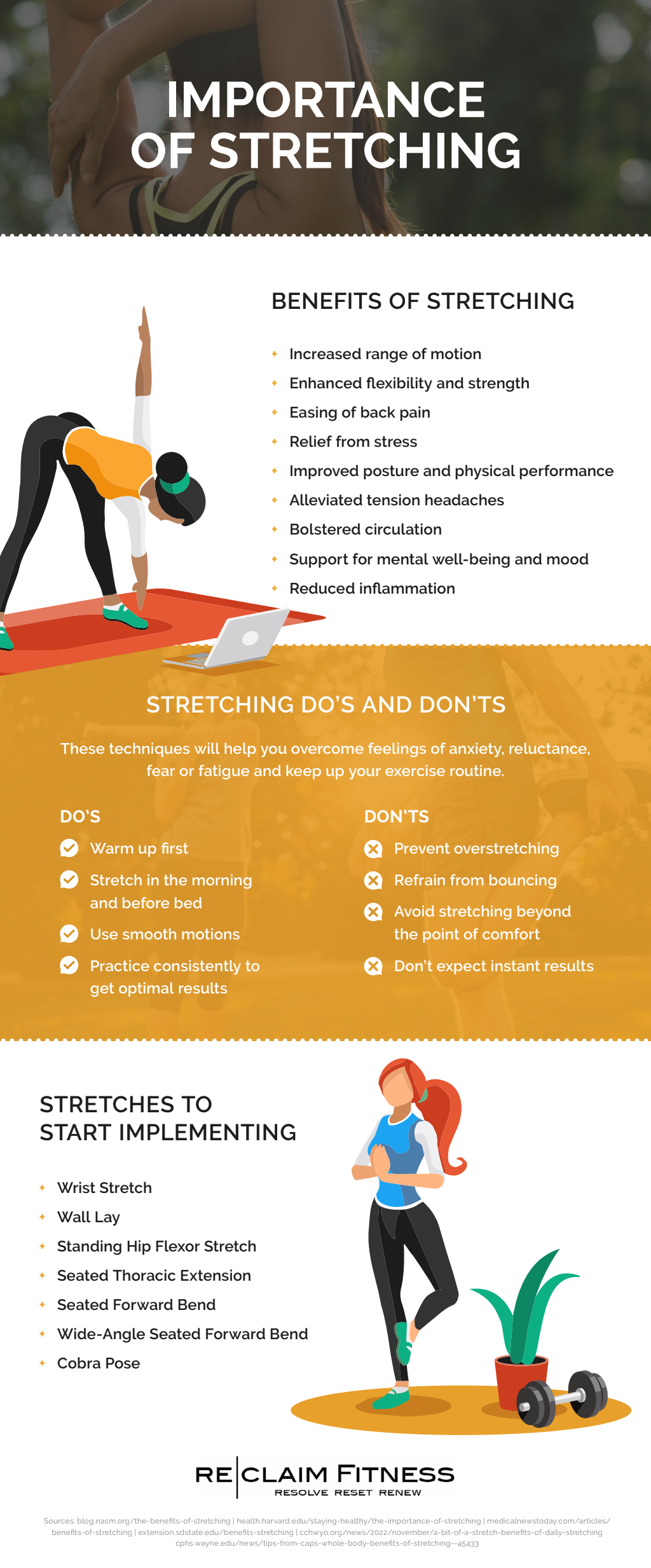
Stretching remains a relevant component of modern sports medicine, supported by decades of clinical research. When applied with proper timing and purpose, it supports mobility, movement quality, and long-term joint health. Rather than viewing stretching as a standalone solution, current evidence positions it as one piece of a comprehensive approach to physical performance and injury management. Check out the infographic below for more information.