
Athletes today are training harder and competing year-round — which means recovery, injury prevention, and performance optimization have never been more important. One of the most valuable tools emerging in sports medicine is the sports performance and recovery assessment, a comprehensive evaluation designed to understand how an athlete’s body moves, performs, and recovers.
Rather than relying on generic training plans, these assessments provide individualized data that helps athletes train smarter, reduce injury risk, and accelerate recovery.
What Is a Sports Performance & Recovery Assessment?
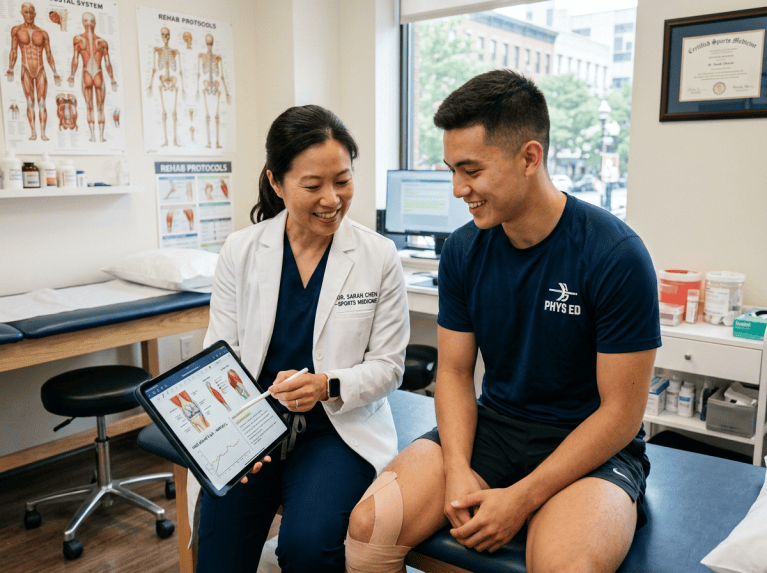
A sports performance and recovery assessment evaluates key elements that influence athletic performance and musculoskeletal health. These assessments often examine:
- Movement mechanics and joint mobility
- Strength imbalances and stability deficits
- Muscle activation patterns
- Recovery capacity and fatigue indicators
- Injury risk factors
Many modern assessments also incorporate motion-capture technology and biomechanical analysis to provide precise feedback about how an athlete moves. For example, motion capture systems can create a 3-D model of running or movement mechanics, identifying inefficiencies and areas that may contribute to injury risk or reduced performance.
Because many sports injuries develop gradually from subtle movement dysfunctions rather than a single traumatic event, identifying these patterns early allows athletes to address them before they become injuries.
A State-of-the-Art Facility in Bensenville
One place where athletes can access this level of evaluation is Midwest Orthopaedics at Rush – Bensenville Physical Therapy & Sports Performance.
Located within the Bo Jackson Elite Sports Complex, the facility offers advanced sports performance and recovery assessments designed to bridge the gap between rehabilitation and peak athletic performance.
Using evidence-based testing and advanced performance equipment, specialists evaluate strength, mobility, biomechanics, and movement efficiency to help athletes return safely to sport or elevate their training to the next level. These services are designed not only for elite competitors but also for youth athletes, recreational runners, and active adults who want to train safely and effectively.
Why These Assessments Matter
From a sports medicine perspective, performance assessments are about prevention as much as performance.
Athletes often focus on training harder, but small inefficiencies — such as limited hip mobility, poor core stability, or asymmetrical strength — can place excess stress on the knees, shoulders, or spine. Over time, these imbalances can contribute to common injuries such as tendinitis, muscle strains, and ligament injuries.
A structured assessment allows specialists to design targeted corrective exercises and recovery strategies that support both performance and long-term joint health.
Personalized Training and Recovery Plans
Following an assessment, athletes often receive individualized recommendations such as:
- Mobility and stability exercises
- Strength training adjustments
- Running or movement mechanics corrections
- Recovery strategies and load-management guidance
The goal is simple: optimize performance while minimizing injury risk.
Performance Starts with Understanding Your Body
Elite athletes have long used movement analysis and recovery monitoring to guide training decisions. Today, those same tools are increasingly available to youth athletes, recreational competitors, and active adults.Understanding how your body moves is often the first step toward performing better — and staying healthy enough to keep doing the activities you love. If you’re interested in learning more about sports performance and recovery assessments or scheduling an evaluation, you can explore additional information and book an appointment.