
With the recent drama of The Masters and improving spring weather, many golfers might head out to their local golf course. But for an increasing number, ongoing medical conditions or the aches and pains of aging might make it a less than enjoyable experience.
Golf is also a sport that continues to change in the face of an increasingly uncertain economic and player landscape. Many courses have closed or raised prices beyond some members’ ability to stay. Add in increasingly changeable weather patterns, an ageing population and many people with mobility or other health issues; these too impact the fine tradition of a social round at your club.
Another technological impact is the arrival of home or in-town simulator centers, allowing people to play golf at any time and on their own terms. With more sociable gatherings and the ability to enjoy other activities or party behaviors not welcome on most courses, golf simulators have taken off in a major way.
The Medical Benefits of Golf Simulators
While there’s plenty to be said for the cardio, gentle workout and relaxing powers of a good walk along a charming golf course, many players face a range of musculo-skeletal issues, perhaps related to their golf play or due to aging or other issues. These prevent them from enjoying that simple pleasure or reduce their ability to play.
Golf simulators enable them to keep enjoying the sport, and perhaps build up strength for a return to the links course. Or it can act as a substitute when they can no longer enjoy the traditional version. People have played simulated golf for decades across arcade machines, home computers and video game consoles, with today’s games like EA Sports PGA Tour looking as close to the real thing as possible.
But a simulator is the only thing that can provide an accurate reaction of your trusty or rusty swing, and the impact it has on the ball. With increasingly high-fidelity simulators taking over in a garage or outbuilding to create a highly realistic recreation of the sport, you can play for almost real, whatever your condition.
Players can visit a public simulator to try one out, or choose to build their own facility at home. Another option is to use a design-and-integration specialist to create your perfect, connected, golf simulator. Not only does a simulator mean you can play the world’s greatest courses, but it makes golf accessible without the drive and wait to play.
The Technology Behind Golf Simulators
Golf simulators are available for various budgets, but typically come with a high-end PC to provide the graphics that are output through a 4K projector, and monitor your stroke physics. A launch monitor tracks your swing, a swash of turf recreates the fairway, and a catcher/screen stops your ball from causing damage for all but the most sliced of shots, and captures your best driver efforts sailing toward the green in 4K visual splendor.
With all the hardware, cables and other paraphernalia tucked carefully out of harm’s way, you have a perfect way to practice and enjoy golf, whatever the weather. All without judgment from other players, and making a great way to recover your health, swing, or as a replacement activity.
The Benefits of Golf Simulators For Health
One of the most common health issues that keeps people off their local course or that golfing holiday is sciatica and related lower-back-pain ailments. Up to 40% of Americans will suffer from sciatica, keeping many off the golf course for an extended period.
Pain in the back, hips, calves and feet can stop people walking any distance. And for months of recovery, movement can be limited, even while walking, stretching and bending are all recommended actions to help sufferers recover.
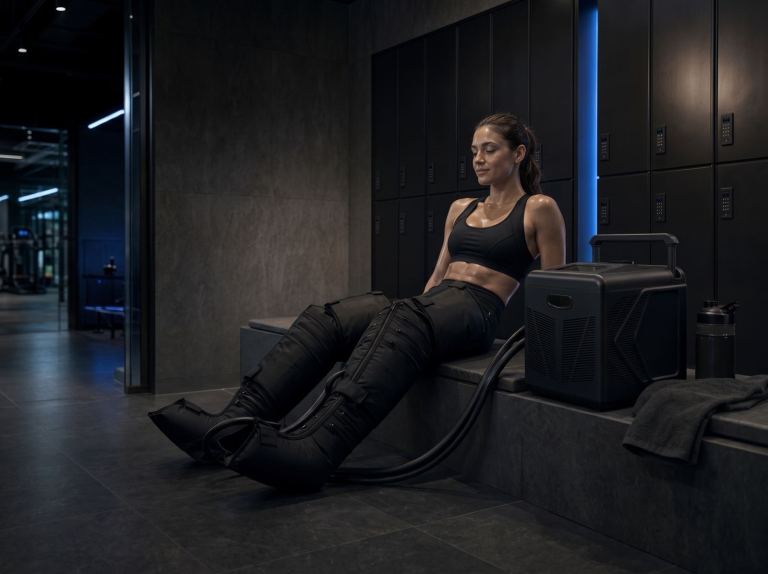
Massage therapy also may have multiple benefits for all sports enthusiasts. But regular golfers will want to keep practicing their swing, and while perhaps not at 100%, simulators help players relax in the knowledge they can pause and have a rest at home whenever the pain, pins-and-needles or muscle stress feels too much.
And, if you were wondering, there are even specialist mats available to help simulate bunker and in-the-rough play, so you can work on the weaker, or lesser-practiced, parts of your game.
Joint pain is another common issue for golfers, especially in the elbows and knees. Working on improved swing mechanics in the comfort of your home golf simulator can help mitigate some of these issues, while taking pressure off knees from extensive walks. Just make sure you have the right-sized equipment and suitable shoes to best support your body.
The Mental Health Benefits of a Golf Simulator
The privacy of a private simulator also supports your mental health as players build up their game without criticism or mocking eyes. They can learn from the machine’s feedback and advice on swing technique and other areas to improve your game.
So, when you are ready to get back out on a real course, you should be more confident and capable. While the initial outlay for a simulator might be high, you do end up saving on lost balls, membership fees, travel, and many other costs. And players can practice 24/7 as and when health, family diary and other timing issues allow.
The simulator also provides a great multiplayer experience for friends, colleagues and family, ideal around a BBQ, a few drinks or other events to make a day of it. Taking a more relaxed approach to golf like this is a better way to destress and learn to avoid making it stressful when looking to make that real chip shot out on the course.
From mastering the fundamentals of golf to preparing for a major collegiate/corporate tournament, or perfecting that swing for a potential pro-am career, golf simulators provide a convenient and rewarding method of improving your game, helping overcome injuries, or just playing when you can no longer make it around all 18-holes.