
Sports medicine education has seen quite the transformation lately. Gone are the days when learning was confined to hospital corridors and training rooms. Today’s healthcare pros have a whole new world of learning at their fingertips, blending hands-on experience with digital innovation. It’s a shift that mirrors broader changes in medical education, where flexibility matters just as much as maintaining those high standards we’ve always valued.
Think about how technology has shaken things up in sports medicine education. Digital platforms aren’t just convenient – they’re revolutionizing how medical professionals master complex procedures and diagnostic techniques. The old-school apprenticeship model hasn’t disappeared, but it’s evolved into something more dynamic, where practical skills meet virtual learning in ways we couldn’t have imagined before.
Transforming Traditional Learning Methods
The digital wave has fundamentally shifted how healthcare professionals stay on top of their game. Medical schools across the country have widely embraced digital learning as a core component of their curriculum. Students accessing an online accelerated BSN program experience this educational evolution firsthand, getting the best of both worlds through hybrid learning. Virtual reality, interactive case studies, remote learning – it’s all creating a more accessible and efficient way to learn.
The integration of mobile learning platforms has further revolutionized educational accessibility. Medical students and practicing professionals can now access comprehensive course materials, anatomical models and peer-reviewed research through their smartphones and tablets. This on-the-go learning approach has proven particularly valuable for busy practitioners who need to balance their continuing education with clinical responsibilities. Learning management systems (LMS) have evolved to include features like adaptive quizzing, progress tracking and collaborative discussion boards, creating a more engaging and effective learning environment.
Gamification has emerged as a powerful tool in medical education, transforming traditionally dry subject matter into engaging learning experiences. Educational platforms now incorporate achievement systems, competitive elements and progress tracking that mirror gaming mechanics. This approach has shown remarkable results in improving knowledge retention and student engagement. Medical students report higher satisfaction levels and better learning outcomes when coursework includes interactive challenges, peer competition and reward systems that make the learning process more dynamic and enjoyable.
Practical Applications in Modern Sports Medicine
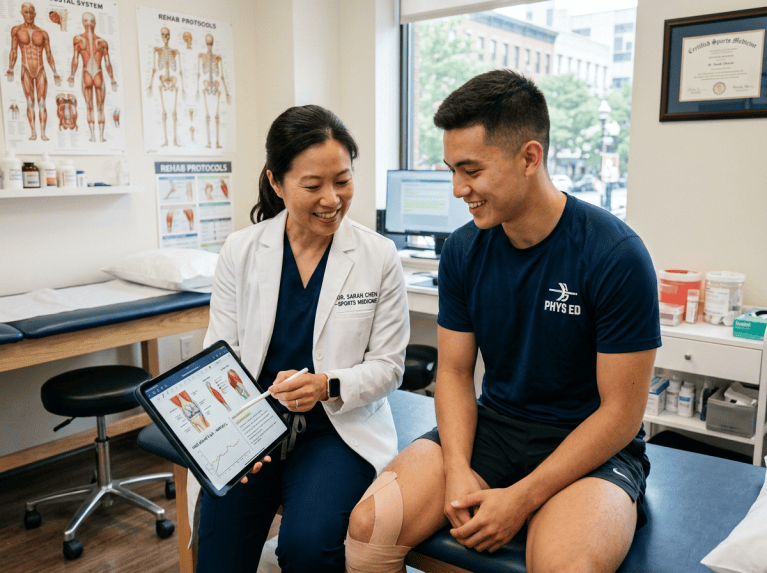
Today’s sports medicine education is all about finding that sweet spot between hands-on experience and tech innovation. Practitioners who combine traditional clinical practice with digital tools consistently demonstrate improved diagnostic capabilities. Virtual anatomy labs, motion capture tech and real-time movement analysis aren’t just fancy add-ons anymore – they’re essential tools helping practitioners really get under the skin of complex musculoskeletal conditions.
Telemedicine platforms have emerged as a crucial component in modern sports medicine practice, requiring practitioners to develop new skill sets in remote patient assessment and care. Educational programs now incorporate specific training modules on virtual consultation techniques, digital patient communication and remote monitoring protocols. This adaptation has proven especially valuable in managing athletic teams across multiple locations and providing immediate consultation during sporting events, where on-site medical presence isn’t always feasible.
Advanced Training Techniques and Technologies
AI and machine learning aren’t just buzzwords – they’re changing the game in sports medicine. AI-assisted diagnostic tools have significantly improved injury prediction capabilities. Modern training programs now let practitioners practice tricky procedures in risk-free virtual environments. It’s been particularly game-changing for rehabilitation specialists, who can track patient progress with incredible detail using wearable tech and smart sensors.
Simulation-based training has reached new heights with the introduction of haptic feedback systems and high-fidelity anatomical models. These advanced training tools provide realistic tactile sensations that closely mimic actual patient interactions, allowing practitioners to develop muscle memory and procedural confidence before working with real patients. The integration of biomechanical analysis software has also enhanced practitioners’ understanding of movement patterns and injury mechanisms, leading to more precise and effective treatment strategies.
Future Perspectives and Opportunities
Looking ahead, the future of sports medicine education is pretty exciting. Virtual and augmented reality training is becoming increasingly integral to continuing medical education. We’re seeing the rise of smart learning systems that adapt to individual needs, making training more efficient and effective. Healthcare pros can now zero in on their specific interests while keeping their overall knowledge sharp.
The emergence of blockchain technology in medical education credentials and certification tracking promises to revolutionize how professional qualifications are verified and maintained. This innovation will streamline the process of credential verification across institutions and borders, making it easier for sports medicine professionals to practice internationally. Additionally, the integration of quantum computing may soon enable more sophisticated injury prediction models and treatment planning systems, pushing the boundaries of what’s possible in sports medicine education and practice.
Summing Up
As we move forward, AI, virtual reality and personalized learning platforms will keep reshaping how we approach sports medicine education. The goal hasn’t changed though – it’s still about developing well-rounded practitioners who can blend traditional know-how with modern tech skills. This evolution means sports medicine professionals are better equipped than ever to handle the complex challenges of modern athletic healthcare while keeping patient care front and center.